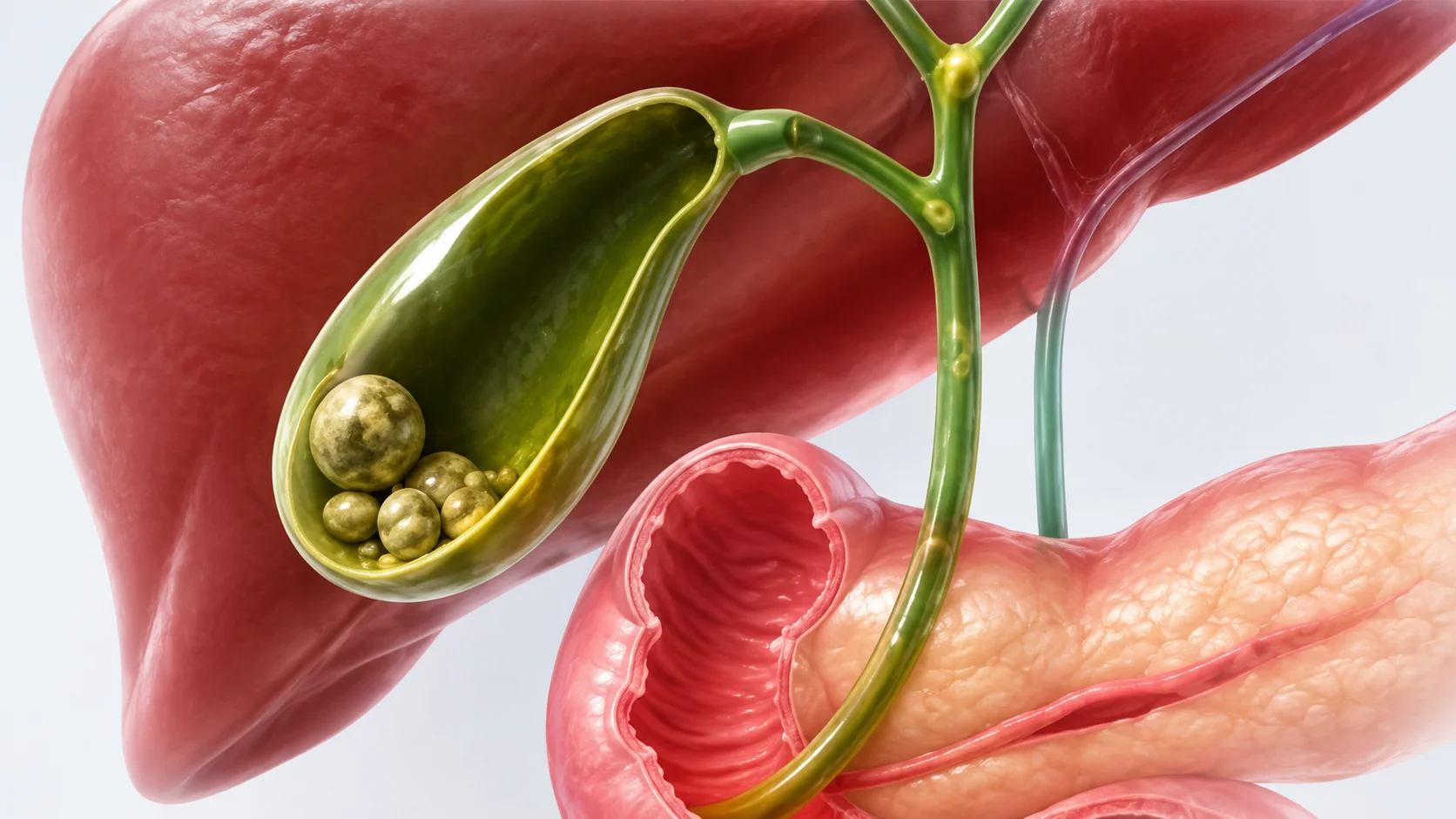



Liver cancer is often found late, because the liver can work well even when part of it is diseased. Knowing who is at risk and getting regular checks is the best way to find it early — when surgery can still cure it.
Primary and secondary liver cancer
Primary liver cancer starts in the liver. The most common type is hepatocellular carcinoma (HCC), which usually develops in a liver already damaged by cirrhosis. Secondary liver cancer (liver metastases) spreads to the liver from another organ — most often the colon or rectum. Selected patients with colorectal liver metastases can also be treated with surgery.
Who is at higher risk?
- Chronic hepatitis B or hepatitis C infection
- Liver cirrhosis from any cause, including alcohol
- Fatty liver disease, especially with diabetes and obesity
- A family history of liver cancer
People in these groups are usually advised an ultrasound and an AFP blood test every 6 months.
Symptoms and early signs
- Early on, often no symptoms at all
- Dull pain or heaviness in the upper right abdomen
- Unexplained weight loss, poor appetite, feeling full quickly
- Tiredness and weakness
- Later: jaundice, swelling of the abdomen (ascites) or a lump below the right ribs
- A person with stable cirrhosis who suddenly gets worse
How is liver cancer diagnosed?
- Ultrasound, then a contrast CT scan or MRI of the liver
- Blood tests including AFP (alpha-fetoprotein) and liver function
- A biopsy in selected cases
- Tests to check whether the cancer has spread, and how well the rest of the liver works
Treatment options
- Liver resection: removing the part of the liver with the tumour — often curative when the rest of the liver is healthy enough
- Liver transplant: for selected patients with HCC and cirrhosis, within accepted transplant criteria
- Ablation: destroying small tumours with heat (RFA or microwave)
- TACE and other targeted treatments when surgery is not possible
- Targeted therapy and immunotherapy for advanced disease
The right choice depends on the size and number of tumours, liver function and overall health, and is best decided by a team that includes an HPB and liver transplant surgeon. Read more about liver cancer surgery and liver transplant.
लिवर कैंसर अक्सर देर से पकड़ में आता है क्योंकि शुरुआत में कोई लक्षण नहीं होते। हेपेटाइटिस B या C, लिवर सिरोसिस, फैटी लिवर और डायबिटीज़ वाले लोगों को हर 6 महीने में अल्ट्रासाउंड और AFP जाँच करानी चाहिए।
लक्षण: दाईं पसलियों के नीचे भारीपन या दर्द, भूख कम होना, वज़न घटना, कमज़ोरी, बाद में पीलिया और पेट में पानी। जल्दी पकड़ में आने पर लिवर का हिस्सा निकालने (रिसेक्शन) या लिवर ट्रांसप्लांट से इलाज संभव है।
Frequently Asked Questions
What are the first signs of liver cancer?
Early liver cancer often has no symptoms. Later signs include pain or heaviness under the right ribs, weight loss, poor appetite, tiredness, jaundice and swelling of the abdomen.
Can liver cancer be cured?
When found early, liver cancer can often be cured with liver resection, liver transplant or ablation. That is why people at risk should have regular ultrasound checks.
Who should be screened for liver cancer?
People with cirrhosis, chronic hepatitis B or C, or advanced fatty liver disease are usually advised an ultrasound and AFP test every 6 months.
This article is for general information and is not a substitute for a medical consultation. Please consult a qualified doctor about your own condition.