
Laparoscopic Surgery
Small Cuts. Faster Recovery.
Laparoscopic (keyhole) surgery uses a few small cuts, a high-definition camera and fine instruments instead of one large incision. Most patients have less pain, a shorter hospital stay and return to daily life sooner.

About Laparoscopic Surgery
In laparoscopic surgery the abdomen is gently inflated with gas and a thin telescope is passed through a small cut, usually near the navel. The surgeon operates while watching a magnified view on a monitor, through two or three other 5–10 mm cuts.
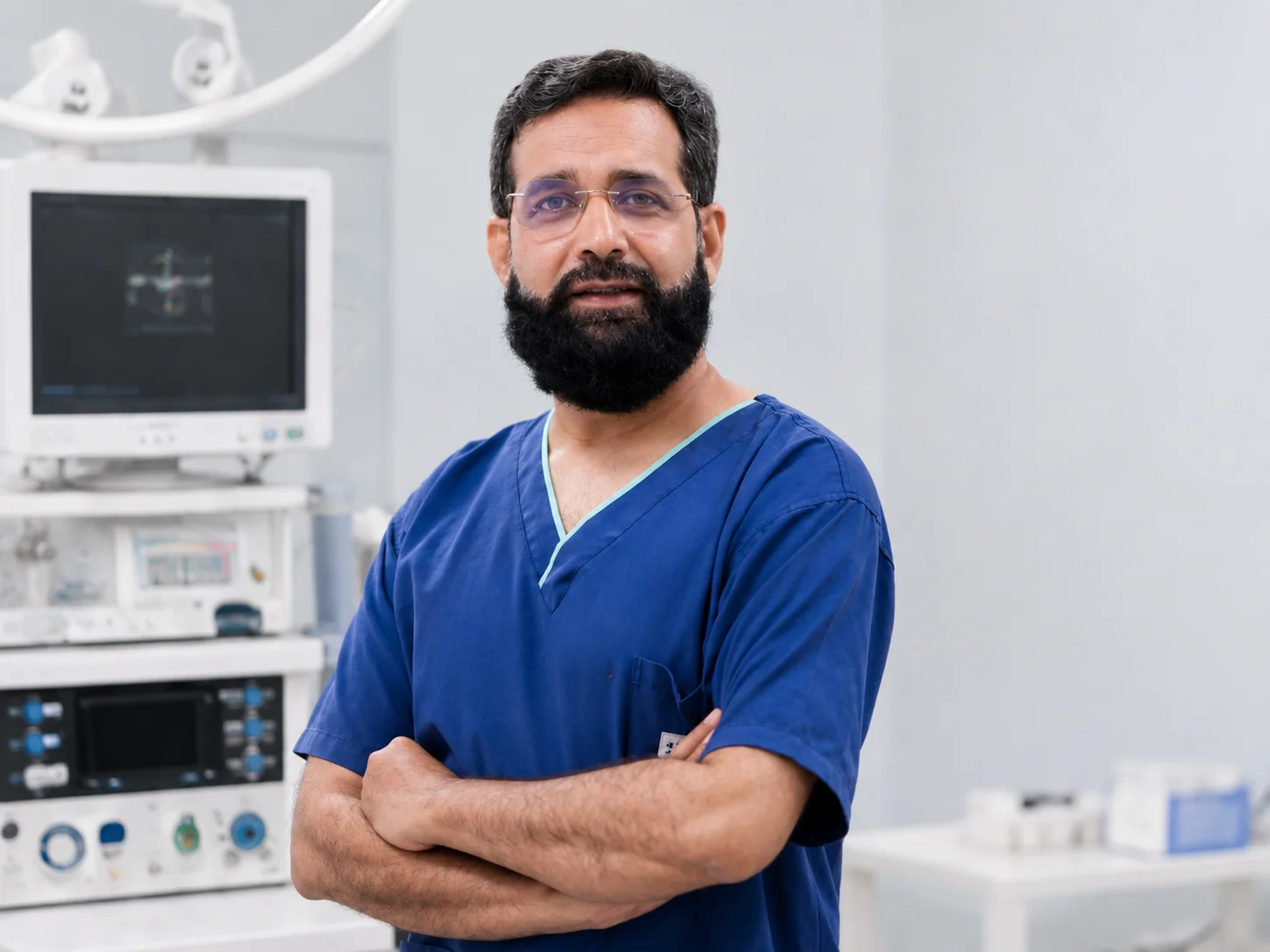
Dr. Waliullah Siddiqui uses laparoscopy for common operations such as gallbladder removal and hernia repair, and for advanced HPB and GI operations — including selected liver and pancreatic resections — when it is safe for the patient.
- Laparoscopic Cholecystectomy
- Laparoscopic Hernia Repair (TEP / TAPP)
- Laparoscopic Appendectomy
- Laparoscopic CBD Exploration
- Laparoscopic Liver & Pancreas Surgery
- Diagnostic Laparoscopy
Conditions Treated with Laparoscopic Surgery
Many common and complex abdominal conditions can be treated through keyhole surgery.

Gallbladder Stones
Inguinal & Umbilical Hernia
Appendicitis
Bile Duct Stones
Liver & Pancreas Tumours

Diagnostic Laparoscopy
Our Laparoscopic Surgery Process
A patient-focused approach for the best outcomes.
Consultation
Examination and review of your reports and scans.
Planning
The right operation and timing for your condition.
Keyhole Surgery
Small cuts, a camera and precise instruments.
Recovery
Early walking, early eating and a short hospital stay.
Follow-up
Review visits in Lucknow or Prayagraj until you are fully healed.
Why Choose Dr. Waliullah Siddiqui?
Expertise. Compassion. Better Outcomes.
Specialised Expertise
Focused experience in complex liver, pancreas, bile duct and transplant surgery.
Advanced Technology
Laparoscopic and robotic surgery with modern imaging and operating theatres.
Personalised Care
A treatment plan built around each patient’s condition, health and goals.
Proven Outcomes
Careful patient selection and protocols aimed at the safest possible result.
Multidisciplinary Team
Hepatologists, anaesthetists, intensivists and nurses working as one team.
Post-Surgical Support
Structured follow-up and recovery guidance after you go home.
Frequently Asked Questions
What is laparoscopic surgery?
Laparoscopic or keyhole surgery is done through a few small cuts using a camera and fine instruments, instead of one large opening. It usually means less pain, smaller scars, a shorter hospital stay and a quicker return to work.
Is laparoscopic surgery better than open surgery?
For many operations — such as gallbladder removal, hernia repair and appendix removal — laparoscopic surgery offers faster recovery with similar or better results. For some complex cases open surgery is safer. Your surgeon will advise which approach suits you.
How long is the hospital stay after laparoscopic surgery?
After laparoscopic gallbladder or hernia surgery most patients go home within 1–2 days. Larger operations need a longer stay.
When can I return to work after laparoscopic surgery?
Most people return to desk work within 1–2 weeks after gallbladder or hernia surgery. Heavy lifting is usually avoided for 4–6 weeks.
Where is laparoscopic surgery done by Dr. Waliullah Siddiqui?
Operations are performed at Max Super Speciality Hospital, Lucknow. Consultations are available at Max Hospital and at the Gastro Care clinics in Lucknow and Prayagraj.
Other Treatments
Liver Transplant
Comprehensive care for liver failure and end-stage liver disease.
Learn MoreHPB Surgery
Advanced surgery for liver, pancreas and bile duct disorders.
Learn MoreLiver Cancer Surgery
Expert care for primary and metastatic liver cancer.
Learn MoreGallbladder Surgery
Advanced surgery for gallstones and gallbladder diseases.
Learn MoreTake the First Step Towards Better Health
Find out whether keyhole surgery is right for you — book a consultation.