

Jaundice — yellow eyes and skin — is a sign, not a disease. It means there is too much bilirubin in the blood. In adults, finding the cause quickly matters, because some causes need only medicines while others need a procedure or an operation.
Three main types of jaundice
- Before the liver (pre-hepatic): red blood cells break down too fast, for example in some blood disorders
- In the liver (hepatic): the liver itself is inflamed or damaged — viral hepatitis (A, B, C, E), alcohol, fatty liver disease, some medicines, cirrhosis
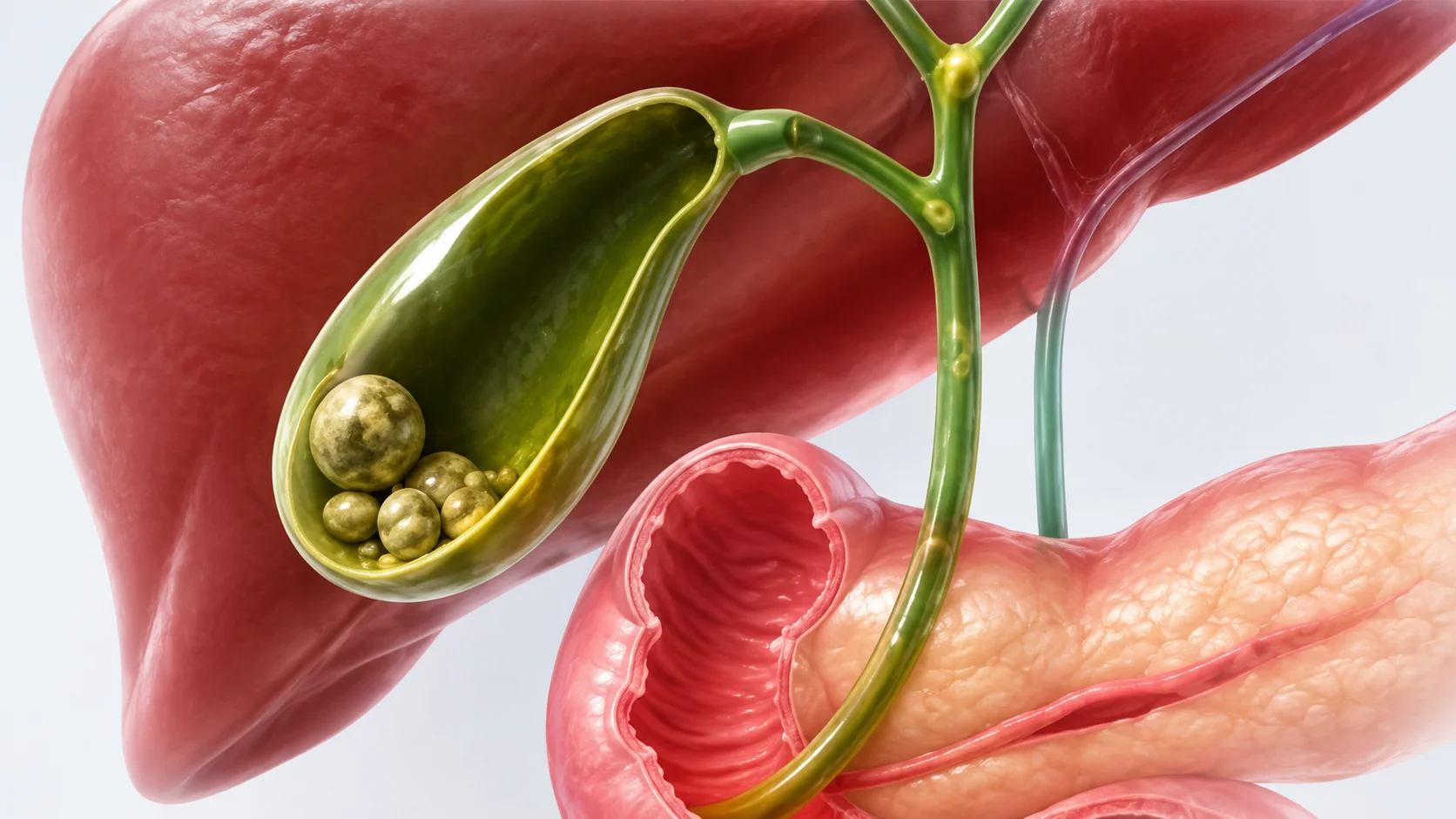
- After the liver (obstructive): bile cannot drain because the bile duct is blocked — by stones, a narrowing (stricture) or a tumour of the bile duct, pancreas or gallbladder
Signs that the bile duct may be blocked
- Dark, tea-coloured urine and pale or clay-coloured stools
- Severe itching all over the body
- Pain in the upper right abdomen, especially if you have gallbladder stones
- Fever with chills along with jaundice — this can be cholangitis, a serious infection that needs urgent treatment
- Painless, slowly deepening jaundice with weight loss — this needs early tests for a tumour
Tests that find the cause
- Blood tests: bilirubin, liver enzymes, viral markers and clotting tests
- Ultrasound of the abdomen — shows gallstones and a dilated bile duct
- MRCP (a special MRI) or CT scan to see the bile duct and pancreas clearly
- Endoscopic ultrasound (EUS) when a small tumour or stone is suspected
How obstructive jaundice is treated
Bile duct stones are usually removed by ERCP, an endoscopy through the mouth, followed by laparoscopic removal of the gallbladder so stones do not form again. Some patients have both done in one sitting by laparoscopic bile duct exploration. Read about gallbladder surgery.
Strictures and tumours of the bile duct, pancreas or gallbladder need careful planning by an HPB surgeon. A temporary stent may relieve the jaundice first; operations such as the Whipple procedure or bile duct resection may follow. Read about HPB surgery.
Do not rely on home remedies or wait for jaundice to settle on its own if you have fever, severe pain, pale stools or weight loss. Early tests make treatment simpler and safer.
पीलिया (जॉन्डिस) अपने आप में बीमारी नहीं, बल्कि एक लक्षण है। इसके कारण हो सकते हैं — लिवर की सूजन (हेपेटाइटिस), शराब, फैटी लिवर, या पित्त की नली (बाइल डक्ट) में पथरी, सिकुड़न या ट्यूमर से रुकावट।
गाढ़ा पेशाब, सफ़ेद/मिट्टी जैसे रंग का मल, पूरे शरीर में खुजली, बुखार के साथ पीलिया या वज़न घटना — ये बाइल डक्ट में रुकावट के संकेत हैं। ऐसे में अल्ट्रासाउंड, MRCP और ख़ून की जाँच ज़रूरी है। पथरी ERCP से निकाली जाती है और ट्यूमर के लिए HPB सर्जन की सलाह लें।
Frequently Asked Questions
When does jaundice need surgery?
Jaundice caused by bile duct stones, strictures or tumours of the bile duct, pancreas or gallbladder often needs ERCP, a stent or surgery. Jaundice from hepatitis is usually treated with medicines.
Is jaundice with fever dangerous?
Yes. Jaundice with fever and chills can mean cholangitis, an infection of a blocked bile duct, which needs urgent hospital treatment.
Which test shows bile duct stones?
An ultrasound may show them, but MRCP (a special MRI) or endoscopic ultrasound gives a clearer answer.
This article is for general information and is not a substitute for a medical consultation. Please consult a qualified doctor about your own condition.